

Keeping your conservatory cool
 As a leading UK supplier of high specification DIY conservatories to the self build market we are specialists in providing an affordable Do It Yourself conservatory solution that will add value to your home and increase your living space all year round. Our genuine trade prices will provide you with considerable savings on typical installed retail prices by eliminating the installation company's profit margin when you install yourself.
Retaining your valuable heat during the winter is covered on our Insulation Values page but it is just as important to consider how you will control the temperature during the summer months.
Adding a new conservatory to your home will certainly increase your living space but you will need to consider carefully how you will control the climate inside, especially during those long hot summer days when the wrong specifications could turn your new living space into a sauna making it uncomfortable to use.
There are several factors that will have an impact on individual requirements and these need to be reviewed at the design stage to ensure that you will be able to comfortably use the conservatory all year round.
North, South, East or West?
 A south facing conservatory will endure long hours of direct sunlight during the summer months and requires careful thought when it comes to deciding on the type of roof glazing. The temperature inside could easily reach unbearable levels if no protection from the sun is specified. For polycarbonate roofs we would always recommend Heatguard or if you are considering a glass roof, our STAYCOOL conservatory glazing or Activ Blue solar control glass are the best options. These are covered in more detail below.
North facing conservatories will not receive much direct sunlight and clear glass or polycarbonate glazing can usually be selected with confidence. Conservatories facing east, west and particularly south will endure long hot summer days of direct heat from the sun and will become unbearably hot without careful consideration for the specification of the glazing. Our new STAYCOOL conservatory roof glazing provides the ultimate protection from direct sunlight reducing glare by 68% and reflects 78% of the sun's heat away from the roof and at the same time provides 94% protection against UV light.
Improve the air-flow
EAVESFLOWTM Trickle Ventilation
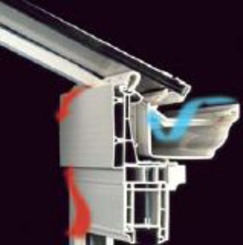 Our PREMIER conservatory range feature Ultraframe conservatory roofs that have patented built-in trickle ventilators fitted into the eaves beam offering controllable secure air flow to the roof space all year round. Upgrade to the Classic Plus roof and increased trickle ventilation is provided to each roof segment.
You can read more about Ultraframe built-in roof ventilation by downloading the Classic Roof Overview.
Optional additional window vents
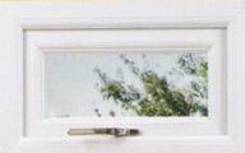 We provide four opening vents as standard but you can add extra openers to suit your budget. Adding more openers obviously improves ventilation but can also provide equal sightlines especially when all opening vents is specified. Each opener has a lockable night ventilation position and trickle ventilators can also be specified if required.
There are two main choices for the roof glazing of your conservatory, polycarbonate or glass. 35mm Polycarbonate has definite cost advantages over glass and is available in several finishes. Glass is the more expensive of the two but offers higher insulation and sound benefits and is also available in many different specifications.
Glass Roof Choices
With the huge increased demand for glass roof conservatories we offer several high specification solar control glass options specifically designed to reduce glare and reflect solar heat whilst at the same time providing enhanced thermal insulation.
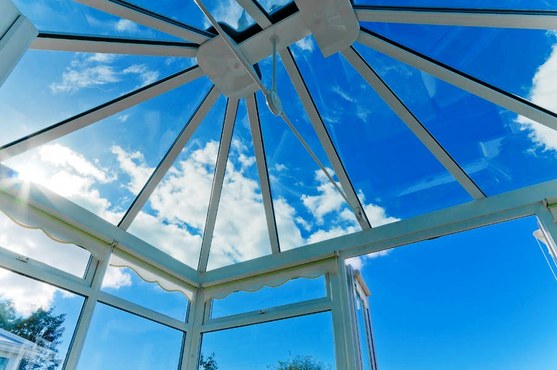

STAYCOOL Solar Control Self Cleaning Glass
 Our standard solar control glass roof specification for our PREMIER conservatory range is a product we call STAYCOOL which provides 78% shading against direct heat from the sun whilst the subtle green tint reduces glare by 68%. STAYCOOL roof glass is proven to reduce the temperature inside the conservatory by 20o F when compared to Pilkington K and Anti-sun glass and offers up to 94% improved protection against UV light protecting your furnishings against fading.
STAYCOOL is supplied with a self clean coating and provides an energy efficient 1.0 U-value making it the ultimate choice for conservatory roof glass designed specifically to help maintain a comfortable climate inside your new living space throughout the year.
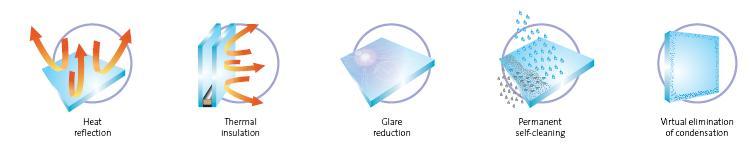
In addition to our flagship STAYCOOL roof glass we also offer other self cleaning solar control glass roof options as shown below.
| PRODUCT | U-VALUE | SOLAR HEAT REFLECTION | LIGHT TRANSMISSION |
 |
1.0 | 78% | 32% |
 |
1.2 | 60% | 47% |
 |
1.2 | 55% | 38% |
 |
1.2 | 55% | 37% |
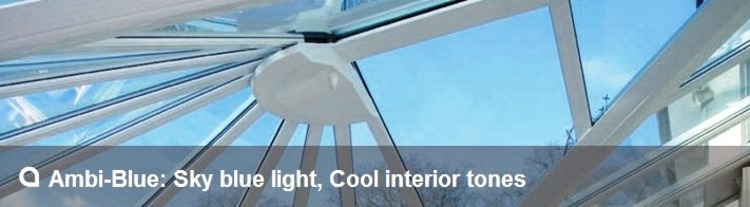
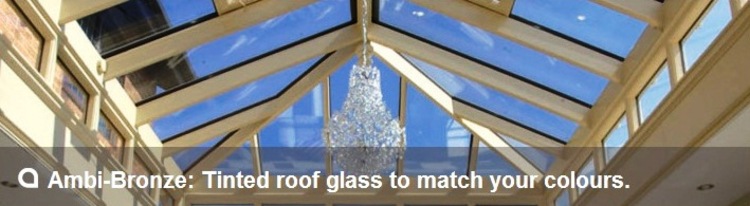
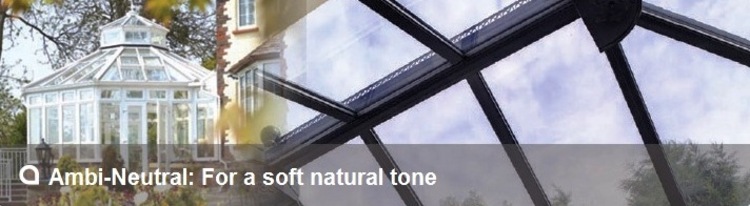
Where solar control glass is not required such as north facing or sheltered conservatories we can also provide clear argon filled Low e Tripleshield roof glazing which will not block solar heat and therefore make use of free heat from the sun.
Polycarbonate Roof Choices
Polycarbonate is still a firm favourite for conservatory roof glazing as it is lightweight, durable, thermally efficient and exceptionally strong thanks to it's multi-wall construction - up to 200 times stronger than glass and virtually shatterproof. Our conservatories can be supplied with a choice of 25mm or 35mm polycarbonate although we always recommend 35mm thickness as the best option for both insulation and noise reduction.
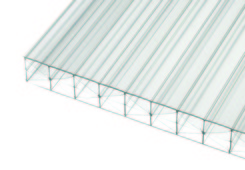
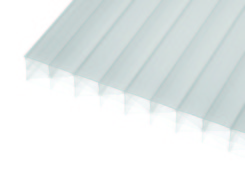
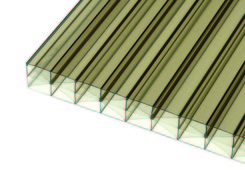
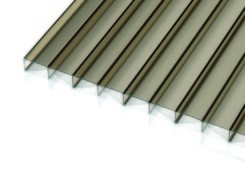
Our 35mm polycarbonate range is supplied as standard for white, light oak and rosewood finish conservatories in a choice of five colours all of which are designed to complement your conservatory and help reduce glare and minimise solar heat gain depending on the colour, position and orientation of your conservatory. Please note that PREMIER conservatories extended range of colour options are currently only available with 25mm thickness polycarbonate roof.
CLEAR |
OPAL |
BRONZE |
 |
 |
 |
BRONZE/OPAL |
HEATGUARD/OPAL |
|
 |
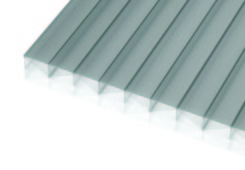 |
These images above are provided for guidance only and results may vary depending on your screen resolution. If you are in any doubt about the choice of polycarbonate colour and its affect on your proposed conservatory we strongly recommend you obtain a sample prior to purchase. |
35mm POLYCARBONATE PERFORMANCE VALUES |
||||
| POLYCARBONATE TYPE | LIGHT TRANSMISSION | SOLAR TRANSMISSION | U VALUE W/m2k | SHADING EFFICIENCY |
| Clear | 63% | 62% | 1.5 | 72% |
| Opal | 15% | 35% | 1.5 | 41% |
| Bronze | 20% | 23% | 1.5 | 27% |
| Bronze/Opal* | 10% | 15% | 1.5 | 17% |
| Heatguard/Opal** | 5% | 8% | 1.5 | 9% |
Light Transmission = percentage of light transmitted through the polycarbonate sheet
Solar Transmission = The proportion of the Suns energy that is transmitted through the sheet. The lower the percentage the better it is.
U Value = Measures heat loss to the outside. The lower the U value the more thermally efficient it is.
Shading Efficiency = The lower the figure the more shade is created.
*Bronze/Opal gives a bright internal appearance even on a dull day, reduces solar heat gain and provides privacy.
**Heatguard/Opal limits the potential for heat build-up within the conservatory, whilst allowing light to enter the roof, deflecting solar radiation and reducing solar heat gain by up to 50% when compared to conventional polycarbonates.
Recommended Climate Control Options
Once you have decided on the roof glazing we recommend you consider the following options to help control the climate inside the conservatory:
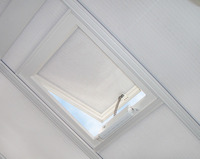 |
Opening Roof VentsAdding opening roof vents will help increase the flow of air into the roof space on a hot summer's day. Roof vents are available manually operated or by electric remote control. A rain sensor unit can also be added that will ensure that the vents close automatically if rain is detected. |
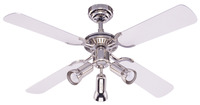 |
Conservatory FansUltraframe roof fans are available in six different styles all with built-in lighting and dual settings for summer and winter operation. The summer setting will move warm air upwards whilst the winter setting will help move warm air in the roof space downwards. All fans have 3 speed settings, reversible blades and can be supplied with a remote control. |
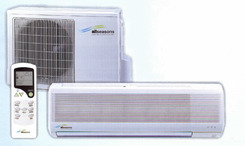 |
Air ConditioningAir conditioning units are a popular upgrade choice for many of our customers and we currently offer a split air conditioning system providing full automatic climate control for just £450 incl vat when ordered with a new conservatory.The information provided on this page is intended as a guide to help you choose the best specification to suit your individual requirements - we hope it has been of help. |